Articles
January 05, 2026
Association looks back on advocacy wins of 2025
Policy accomplishments helped businesses succeed at the federal, state, and local levels.
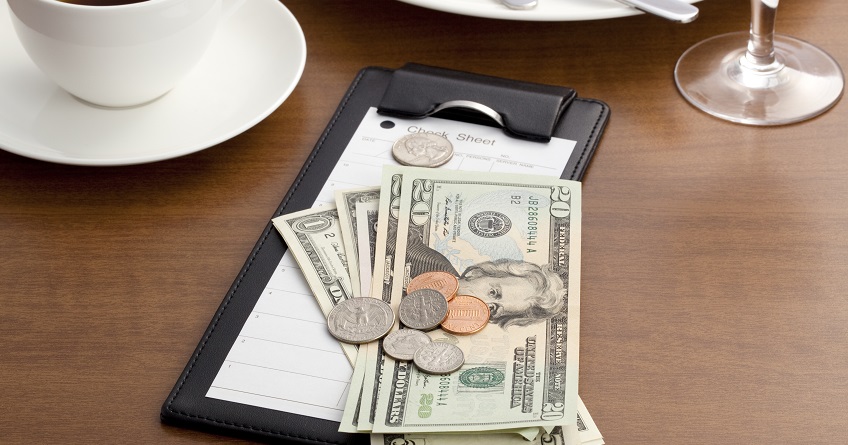
In partnership with State Restaurant Associations, the public affairs team successfully defended the tip credit across the country.
Over the past year, the National Restaurant Association secured several key wins across all levels of government.
At the federal level, the public affairs team navigated a shifting political landscape shaped by a new Administration and one-party rule in Congress. This success ensured that the voice of the restaurant industry remained front and center in policy debates.
Most notably, the team helped change the national conversation around the tip credit. Where there was once growing momentum to eliminate it, the Association successfully built support to preserve the critical model for restaurants as well as its tipped workers employees.
Here are the Association’s advocacy accomplishments in 2025.
At the federal level, the public affairs team navigated a shifting political landscape shaped by a new Administration and one-party rule in Congress. This success ensured that the voice of the restaurant industry remained front and center in policy debates.
Most notably, the team helped change the national conversation around the tip credit. Where there was once growing momentum to eliminate it, the Association successfully built support to preserve the critical model for restaurants as well as its tipped workers employees.
Here are the Association’s advocacy accomplishments in 2025.
- Permanent pro-growth tax policies: The tax provisions in the One Big, Beautiful Bill, also known as the Working Families Tax Cut, marked a legislative victory for the restaurant industry. The comprehensive package included pro-growth tax policies that would strengthen restaurants and foodservice businesses nationwide, empowering owners to create jobs, invest in their operations, and provide long-term certainty for their local economies. Key tax provisions in the bill offered relief and long-term certainty for operators, including expensing capital equipment purchases that allow restaurants to invest in upgrades while managing payroll and other expenses. The 20% Qualified Business Income (QBI) deduction benefits 77% of restaurants structured as pass-through entities, and the restoration of depreciation and amortization to the business interest expense deduction freed up capital for debt repayment and expansion. The bill also ensured permanent tax credits for family and medical leave, supported estate tax relief to help family-owned restaurants stay in business, and included President Trump’s No Taxes on Tips and No Taxes on Overtime provisions, that allow tipped employees to deduct up to $25,000 in tips and hourly employees to deduct $12,500 in premium overtime pay from their federal taxes between 2025 and 2028.
- Tariff relief on food/agricultural products: The team secured a major win on trade policy with the removal of reciprocal tariffs on key food and agricultural products, helping to stabilize supply chains and reduce costs for restaurant operators and consumers nationwide. Additionally, the Association ensured that USMCA-compliant, imported goods remained exempt for our two major trading partners—Mexico and Canada.
- RLC suit over Marine Mammal Protection Act implementation: The Restaurant Law Center joined a broad seafood coalition in suing the National Oceanic and Atmospheric Administration over implementation of the Marine Mammal Protection Act, challenging rules that would impose significant compliance costs on seafood suppliers and restaurants. In a major development, the U.S. Court of International Trade stayed NOAA’s Jan. 1, 2026, import ban on blue swimming crab fisheries from Vietnam, the Philippines, Indonesia, and Sri Lanka, ensuring continued access to those critical products.
- Swipe fees: The Association worked to increase support for the Credit Card Competition Act, which would lower swipe fees for restaurant operators. This bipartisan issue was a top priority at our Public Affairs Conference, where nearly 600 industry members met with policymakers on Capitol Hill to build support for the legislation.
- Black-market reservations: Six state restaurant associations: Florida, Hawaii, Illinois, Louisiana, Nevada, and New York, successfully led efforts to curb black-market reservations disrupting the dining experience. Working with state governments, the associations helped establish regulatory frameworks that return control of reservations to restaurants. Similar legislation was also introduced in California and New Jersey.
- Make America Healthy Again legislation: The public affairs team worked with the Association’s state restaurant association partners to help educate and explain the operational challenges of several state MAHA bills introduced this year. Several of them did not move forward following industry engagement, and several were amended to improve them or provide additional time for implementation. The team also worked with the Administration to successfully include language in their MAHA report, highlighting healthy options on kids’ menus through the Kids LiveWell program.
- Cocktails-to-go: The Association continued building industry momentum on cocktails to-go, securing permanent legislation and the extension of existing regulations in 30 states, plus the District of Columbia.
- District of Columbia tip credit: In a major win for restaurant operators, the Restaurant Association Metropolitan Washington—working in close partnership with the National Restaurant Association—successfully advocated for the DC Council to reinstate the tip credit, which effectively replaced Initiative 82. The Council’s decision would cap the tipped wage at 75% of the full minimum wage by 2034. The compromise delivered immediate relief to restaurant operators, helping to protect jobs, reduce closures, and support the long-term sustainability of DC’s hospitality industry.
- Michigan tip credit: The Michigan Restaurant and Lodging Association, with support from the National Restaurant Association, secured a major bipartisan victory by restoring the tip credit, protecting a critical compensation model for operators and employees alike.
- Colorado minimum wage: The Colorado Restaurant Association, in collaboration with our public affairs team, assisted passage of legislation allowing cities with minimum wages above the state minimum to increase their tip credits, providing greater flexibility for local jurisdictions and operators.
- Nationwide tip credit defense: In partnership with State Restaurant Associations, the public affairs team successfully defended the tip credit across the country. No legislation to eliminate the tip credit passed out of any state legislative chamber in 2025—a major win for preserving this essential compensation structure.
- State interchange fee legislation: The Association and its SRA partners worked to monitor and support interchange fee legislation introduced in 25 states and the District of Columbia, ensuring the industry’s voice was represented in every debate on the issue.
- California minimum-wage advocacy: The Association continued its work with industry partners to spotlight the negative impacts of California’s $20 per hour fast-food minimum wage, educating lawmakers and the public on the policy’s unintended consequences for operators, employees, and consumers.
Sign up for our Newsletter
The latest news from the National Restaurant Association, published every other Thursday
By clicking Submit I agree to receive email communications from the National Restaurant Association and agree to our Privacy Policy(Opens in a new window).