Articles
February 24, 2026
Operator success: Meet customers where they are
Chief Economist Chad Moutray says focus on value, staying nimble and innovative, are key to profitability.

Operators will need to communicate value proposition to customers and meet demands for new flavor experiences.
Restaurant operators are cautiously optimistic about sales growth this year despite some business challenges, including inflation, changing consumer tastes, and decreased customer spending, according to the National Restaurant Association’s 2026 State of the Restaurant Industry report.
Still, the industry’s total sales are expected to reach $1.55T, largely because consumers want to dine out even though they’re increasingly focused on seeking out value when they do.
Dr. Chad Moutray, Senior Vice President of Research and Chief Economist for the Association, shared some thoughts on how operators can show resilience and innovation, and what the industry can expect in 2026.
What’s the biggest trend you’ve seen so far?
There’s no way of getting around it; the math is difficult. We’ve seen rising costs across the board that restaurants must deal with. They’re also facing pushback from customers who are saying they don’t want to pay more than they already are, that they are tired of inflation and the increased costs being passed down to them. The good news here is that we’re still seeing resilience; we’re still expecting growth.
MORE: Report: Sales to hit $1.55T in 2026 despite challenging business environment
What are some challenges operators need to address to stay profitable?
Focusing on value will be crucial. Successful operators will have to find ways to effectively communicate their value propositions to customers and, at the same time, meet their increased demands for new flavor experiences. Also, adapting to certain health trends, like the impact of GLP-1 medications on menu offerings and portion sizes, will resonate with customers. Those who use those medications may have smaller appetites, so operators may look to offer smaller plates and more protein-centric options that cater to their needs.
Who is dining out right now?
Right now, we’re experiencing what’s called a K-shaped economy, where individuals at the top are doing quite well and have enough disposable income to prioritize dining out. In contrast, while others would like to go out more often, they are more stressed in their personal finances, and they are more likely to rely on value to get them there. Whether you’re a limited service or full service restaurant, you’ve got to make sure you’re communicating and delivering value, and that your customers recognize that, whether it’s through limited time offerings or menu innovation, or however else you might communicate the importance of the value you’re offering—especially with lower- and middle-class consumers who are feeling financial stress.
What role will value play in how consumers choose to dine out?
As everyone knows, it’s not always about price. It’s also about the overall experience, the menu options, etc. I do think that in a world where the consumer is feeling financially stressed, it is, often, about price, so I think it’s incumbent on restaurants to No. 1, make sure they’re letting their customers know they’re a great value for the money, and No. 2, find ways to continue enticing customers, with LTOs, for example.
Where do you see growth happening in 2026?
Fast casual continues to be one of the bright spots, and I don’t expect that to stop. At the same time, there are several casual-dining restaurants who are performing well, too—the Applebee’s, Texas Roadhouse, and Chili’s chains—to name a few. We’ve been seeing a bit of a resurgence there. They’re able to compete on price with some of the fast-casual brands and have gotten good at communicating their value to their customers.
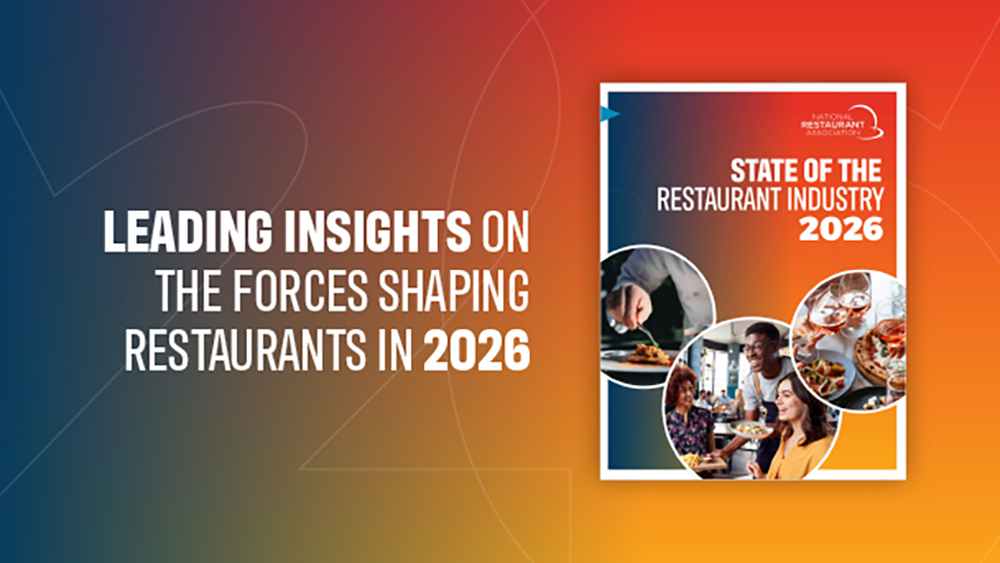
Download the 2026 State of the Restaurant Industry report here
Still, the industry’s total sales are expected to reach $1.55T, largely because consumers want to dine out even though they’re increasingly focused on seeking out value when they do.
Dr. Chad Moutray, Senior Vice President of Research and Chief Economist for the Association, shared some thoughts on how operators can show resilience and innovation, and what the industry can expect in 2026.
What’s the biggest trend you’ve seen so far?
There’s no way of getting around it; the math is difficult. We’ve seen rising costs across the board that restaurants must deal with. They’re also facing pushback from customers who are saying they don’t want to pay more than they already are, that they are tired of inflation and the increased costs being passed down to them. The good news here is that we’re still seeing resilience; we’re still expecting growth.
MORE: Report: Sales to hit $1.55T in 2026 despite challenging business environment
What are some challenges operators need to address to stay profitable?
Focusing on value will be crucial. Successful operators will have to find ways to effectively communicate their value propositions to customers and, at the same time, meet their increased demands for new flavor experiences. Also, adapting to certain health trends, like the impact of GLP-1 medications on menu offerings and portion sizes, will resonate with customers. Those who use those medications may have smaller appetites, so operators may look to offer smaller plates and more protein-centric options that cater to their needs.
Who is dining out right now?
Right now, we’re experiencing what’s called a K-shaped economy, where individuals at the top are doing quite well and have enough disposable income to prioritize dining out. In contrast, while others would like to go out more often, they are more stressed in their personal finances, and they are more likely to rely on value to get them there. Whether you’re a limited service or full service restaurant, you’ve got to make sure you’re communicating and delivering value, and that your customers recognize that, whether it’s through limited time offerings or menu innovation, or however else you might communicate the importance of the value you’re offering—especially with lower- and middle-class consumers who are feeling financial stress.
What role will value play in how consumers choose to dine out?
As everyone knows, it’s not always about price. It’s also about the overall experience, the menu options, etc. I do think that in a world where the consumer is feeling financially stressed, it is, often, about price, so I think it’s incumbent on restaurants to No. 1, make sure they’re letting their customers know they’re a great value for the money, and No. 2, find ways to continue enticing customers, with LTOs, for example.
Where do you see growth happening in 2026?
Fast casual continues to be one of the bright spots, and I don’t expect that to stop. At the same time, there are several casual-dining restaurants who are performing well, too—the Applebee’s, Texas Roadhouse, and Chili’s chains—to name a few. We’ve been seeing a bit of a resurgence there. They’re able to compete on price with some of the fast-casual brands and have gotten good at communicating their value to their customers.
Download the 2026 State of the Restaurant Industry report here
Get the report
Get the report
Sign up for our Newsletter
The latest news from the National Restaurant Association, published every other Thursday
By clicking Submit I agree to receive email communications from the National Restaurant Association and agree to our Privacy Policy(Opens in a new window).