Articles
May 12, 2026
Policy team tees up need for immigration reform
Association’s experts talk about plans to take pro-business agenda to Capitol Hill.
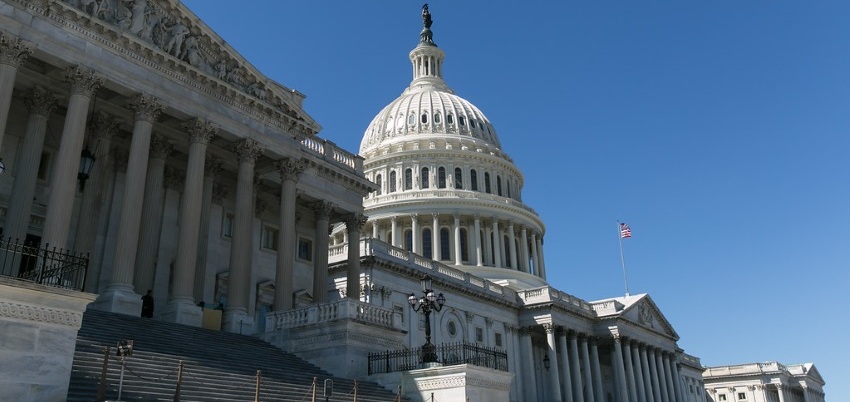
Current U.S. demographic trends are shrinking the labor pool, making immigration policy critical as a workforce and political issue.
A recent discussion on immigration reform, hosted by subject matter experts from the National Restaurant Association’s public affairs team, examined the ways in which current and future policies affect the restaurant industry’s ability to staff their businesses and continue to grow.
Sean Kennedy, Chief Advocacy Officer, Aaron Frazier, Vice President of Public Affairs, and Jordan Heiliczer, Director of Labor & Workforce Policy, emphasized that restaurants, with nearly 16 million employees, are not only the nation’s second-largest private-sector employers, but that one in four of them are foreign born. Additionally, they noted that there are roughly 900,000 job openings per month and that despite wage increases of between 30% and 35% since 2020, operators say they are understaffed, are experiencing longer vacancy periods, and are having to reduce their operating hours, constraining their ability to expand and grow profitability.
Frazier added that the restaurant industry, if it plans to add 1.7 million new jobs over the next decade, will need other sources of workers to stay and grow in those jobs.
“The labor challenge is here,” he said. “If 22% of restaurants say they're understaffed and find it hard to fill one out of every two openings, then we're just not getting as many applicants for essential roles, like chef and cook positions, which are key to restaurant operations. The fact is the workforce participation rate has dropped to its lowest rate since 1977. Not only are less people applying, but less people are looking to join the workforce.”
The three agreed that current U.S. demographic trends, which include declining birth rates, fewer young people entering the workforce, and falling labor-force participation, are shrinking the labor pool, making immigration policy critical as both a workforce and political issue.
The speakers further indicated that policy discussions are now centering on active and emerging federal proposals, including:
“There is a need for legislation that provides a legal way for workers to stay in the United States and continue working,” Heiliczer said. “We need real certainty for them, and for you as an employer. We need to give workers the certainty that they can show up, invest in their jobs, and build careers instead of wondering if they'll be around next year. A stable workforce is what will allow operators to run their businesses successfully.”
Watch the full presentation On Demand
Sean Kennedy, Chief Advocacy Officer, Aaron Frazier, Vice President of Public Affairs, and Jordan Heiliczer, Director of Labor & Workforce Policy, emphasized that restaurants, with nearly 16 million employees, are not only the nation’s second-largest private-sector employers, but that one in four of them are foreign born. Additionally, they noted that there are roughly 900,000 job openings per month and that despite wage increases of between 30% and 35% since 2020, operators say they are understaffed, are experiencing longer vacancy periods, and are having to reduce their operating hours, constraining their ability to expand and grow profitability.
Immigration reform matters
“The challenge for the restaurant industry is that we’re looking at a level of enforcement activity that’s gone beyond what was pledged,” Kennedy said. “We have migrants who are here lawfully but are afraid to come into work. We have policies that absolutely constrict overall migration into the United States, that in the long run, ultimately obliterate America's privilege as THE country where the world's smartest people want to work, study and live. What you all know well is that nearly a quarter of our under-18 population is native born with immigrant parents, and that 20% of the restaurant industry is foreign born. So, if you’re the nation's second-largest employer, immigration reform matters.”Frazier added that the restaurant industry, if it plans to add 1.7 million new jobs over the next decade, will need other sources of workers to stay and grow in those jobs.
“The labor challenge is here,” he said. “If 22% of restaurants say they're understaffed and find it hard to fill one out of every two openings, then we're just not getting as many applicants for essential roles, like chef and cook positions, which are key to restaurant operations. The fact is the workforce participation rate has dropped to its lowest rate since 1977. Not only are less people applying, but less people are looking to join the workforce.”
The three agreed that current U.S. demographic trends, which include declining birth rates, fewer young people entering the workforce, and falling labor-force participation, are shrinking the labor pool, making immigration policy critical as both a workforce and political issue.
Three-part immigration framework
The speakers shared the Association’s three-part immigration framework that the team is working on. It consists of:- Protecting the workforce through the creation of stable, legal pathways for Dreamers, Temporary Protected Status holders (TPS), and long-tenured workers who are integral to restaurant operations
- Fix the work visa system so it reflects year-round, labor intensive restaurant demand through expanded, modernized, and more predictable visa options, such as the proposed Essential Workers for Economic Advancement Act (EWEA) and its H 2C visa
- Build a forward-looking system that provides a reliable, legal pipeline of workers at the scale that future growth requires
The speakers further indicated that policy discussions are now centering on active and emerging federal proposals, including:
- The American Dream and Promise Act for Dreamers and TPS holders
- Targeted TPS extensions for countries such as Haiti and Venezuela
- The EWEA bill for year round essential workers
- The comprehensive Dignity Act, which combines pathways to legal status for long tenured, undocumented, DACA, and TPS populations with visa and enforcement reforms
“There is a need for legislation that provides a legal way for workers to stay in the United States and continue working,” Heiliczer said. “We need real certainty for them, and for you as an employer. We need to give workers the certainty that they can show up, invest in their jobs, and build careers instead of wondering if they'll be around next year. A stable workforce is what will allow operators to run their businesses successfully.”
Watch the full presentation On Demand
Sign up for our Newsletter
The latest news from the National Restaurant Association, published every other Thursday
By clicking Submit I agree to receive email communications from the National Restaurant Association and agree to our Privacy Policy(Opens in a new window).