Articles
October 26, 2026
Restaurant Legal Summit focuses on issues challenging the industry
Conference offers strategies on dealing with legislative and regulatory matters
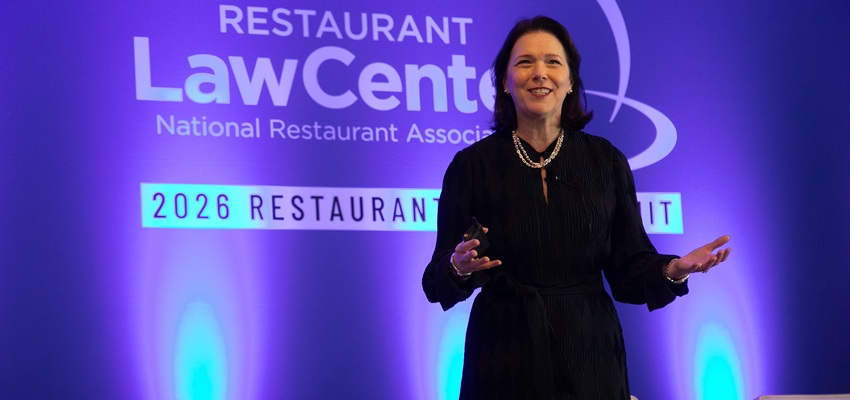
Korsmo told conference attendees that a single lawsuit could reshape the restaurant landscape, affecting the ability to grow, serve guests, and support communities.
Legal and regulatory challenges facing the foodservice and hospitality industry took center stage at the National Restaurant Association’s 10th Annual Restaurant Legal Summit, hosted by the Restaurant Law Center, Oct. 21–23 in San Diego. Topics addressed included AI-driven litigation, California regulations, federal labor priorities, influencer agreements, delivery pricing, gas bans, OSHA heat standards, and a look at the 2026 midterm elections.
“A single lawsuit can reshape the restaurant landscape, affecting operators’ ability to grow, serve guests, and support their communities,” Korsmo said. “Our advocacy doesn’t end when a bill is signed or a regulation is issued. The Restaurant Law Center is our industry’s voice in the courts, ensuring that restaurants’ interests are heard on the issues that matter most.”
Epstein Becker Green P.C.’s Paul DeCamp and Kathleen A. Barrett, Berkeley Research Group’s Dr. Mike DuMond, and Darden Restaurants’ Dawn Stoewe discussed strategies for litigating new AI-driven wage and hour cases.
Baker Botts’ J. Mark Little and Scott Novak examined the implications of national, state, and local gas bans, other anti-gas measures, and the legal strategies for challenging them.
Fisher Phillips LLP’s Alden J. Parker, Emily N. Litzinger, and Kristin R.B. White joined Papa John’s International’s Dr. Sammy Davis to outline OSHA heat regulations and operational implications. They discussed scalable heat-response strategies, including staffing adjustments, hydration and recovery breaks, challenges across outdoor dining, drive-thru, delivery, catering, and special events, and emerging liability risks.
U.S. Department of Labor Wage and Hour Division Administrator Andrew Rogers addressed federal priorities, regulatory developments, compliance resources, and enforcement trends. Former National Labor Relations Board Chairman Marvin Kaplan, now with Jackson Lewis P.C., discussed the House-passed Faster Labor Contracts Act, pending Senate consideration. It could reshape first-time union negotiations through compressed bargaining timelines and mandatory mediation.
Greenberg Traurig LLP’s Riley Lagesen examined celebrity and influencer partnerships, including investments, joint ventures, and ambassador agreements, outlining contractual structures, economic terms, and other legal and business provisions.
Last, but not least, Jenner & Block LLP’s Gabriel K. Gillett and Jon Skladany joined Yum! Brands’ Erika Burkhardt to discuss how the midterm elections could affect the Trump Administration’s next two years and change oversight in 2027.
Ensuring that restaurants’ issues are heard
Association President & CEO Michelle Korsmo and Restaurant Law Center Executive Director and Chief Legal Counsel Robin Repass opened the event, bringing together legal, human resources, and brand representatives to discuss industry responses.“A single lawsuit can reshape the restaurant landscape, affecting operators’ ability to grow, serve guests, and support their communities,” Korsmo said. “Our advocacy doesn’t end when a bill is signed or a regulation is issued. The Restaurant Law Center is our industry’s voice in the courts, ensuring that restaurants’ interests are heard on the issues that matter most.”
Epstein Becker Green P.C.’s Paul DeCamp and Kathleen A. Barrett, Berkeley Research Group’s Dr. Mike DuMond, and Darden Restaurants’ Dawn Stoewe discussed strategies for litigating new AI-driven wage and hour cases.
Baker Botts’ J. Mark Little and Scott Novak examined the implications of national, state, and local gas bans, other anti-gas measures, and the legal strategies for challenging them.
Fisher Phillips LLP’s Alden J. Parker, Emily N. Litzinger, and Kristin R.B. White joined Papa John’s International’s Dr. Sammy Davis to outline OSHA heat regulations and operational implications. They discussed scalable heat-response strategies, including staffing adjustments, hydration and recovery breaks, challenges across outdoor dining, drive-thru, delivery, catering, and special events, and emerging liability risks.
U.S. Department of Labor Wage and Hour Division Administrator Andrew Rogers addressed federal priorities, regulatory developments, compliance resources, and enforcement trends. Former National Labor Relations Board Chairman Marvin Kaplan, now with Jackson Lewis P.C., discussed the House-passed Faster Labor Contracts Act, pending Senate consideration. It could reshape first-time union negotiations through compressed bargaining timelines and mandatory mediation.
Greenberg Traurig LLP’s Riley Lagesen examined celebrity and influencer partnerships, including investments, joint ventures, and ambassador agreements, outlining contractual structures, economic terms, and other legal and business provisions.
Last, but not least, Jenner & Block LLP’s Gabriel K. Gillett and Jon Skladany joined Yum! Brands’ Erika Burkhardt to discuss how the midterm elections could affect the Trump Administration’s next two years and change oversight in 2027.
Sign up for our Newsletter
The latest news from the National Restaurant Association, published every other Thursday
By clicking Submit I agree to receive email communications from the National Restaurant Association and agree to our Privacy Policy(Opens in a new window).