Articles
June 08, 2026
Value, efficiency, and overall experience are keys to success in challenging times
Association’s Chief Economist Chad Moutray talks strategy with top execs from Fogo de Chão and DineAmic brands.
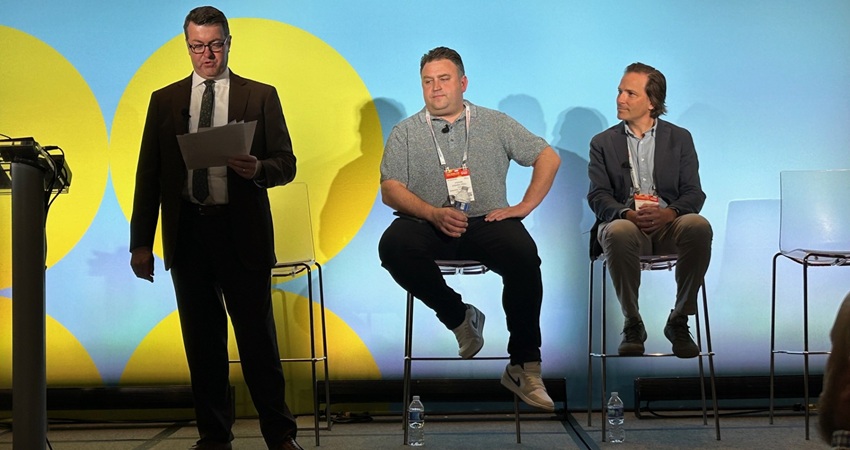
The Association's Chad Moutray, left, with Stephen Stoll, center, and Michael Breed, right, talked about how exceeding guests' expectations is helping them succeed in an uncertain economy.
Restaurant executives struck a cautiously optimistic tone at a session during the recent National Restaurant Association Show. The session, “The 2026 State of the Restaurant Industry: Position Yourself for Success in the Face of Uncertainty”, emphasized that delivering great guest experiences while strategically managing costs are a winning combination.
Moderated by Chad Moutray, the National Restaurant Association’s senior vice president of research and chief economist, the session featured Michael Breed, chief marketing officer of Brazilian steakhouse chain Fogo de Chão, and Stephen Stoll, chief operating officer and partner at regional restaurant company DineAmic Hospitality, who talked about the current operating environment.
.
Moutray began by describing today’s economy as “K-shaped,” with higher-income consumers seemingly spending freely while lower-income households are facing growing financial pressures. He said rising fuel costs are a concern, with elevated gas and diesel prices expected to add roughly $125 billion in annual costs for consumers. That, potentially, could reduce their restaurant spending. But, despite their economic anxiety, consumers are continuing to prioritize dining out over other discretionary purchases, he stated.
“People still want to celebrate,” Moutray noted, indicating that restaurant demand appears more resilient than other retail categories. In fact, industry data shows that restaurant sales and employment are continuing to grow, even as inflation has weighed on real sales growth and traffic gains.
“Guests are looking for reasons to connect and celebrate,” Breed said, and those expectations are only going up. Our job is to continue to exceed in meeting those expectations.”
Operators, trying to meet varying consumer budgets without compromising brand positioning, are expanding their value options beyond simple discounting. According to Breed, Fogo de Chão has introduced offerings such as its “Best of Brazil” menu and bar-focused experiences, while still providing premium upgrades for guests seeking indulgent celebrations. DineAmic, Stoll said, has extended happy hours, simplified pricing and introduced more accessible food and beverage promotions to attract more weekday diners.
On the operational side, both restaurateurs said their companies are aggressively pursuing efficiencies to offset rising labor, food and operating costs. Their strategies include renegotiating supplier relationships, bringing services in-house and adopting flexible menu structures that allow operators to take advantage of favorable purchasing opportunities.
They also said artificial intelligence is playing a growing role in their operations. Both are using AI-powered tools for phone support, reservations, reporting and invoice auditing, which allows managers to focus more on hospitality and improve efficiency.
The two further noted that marketing efforts are becoming increasingly data driven as well, emphasizing the importance of balancing email marketing and social media platforms, such as Instagram and TikTok, along with website optimization and loyalty programs that encourage repeat visits through rewards and gamification.
Still, despite ongoing uncertainty, all of the panelists said they were positive about the future. Moutray told the audience that continued GDP growth and nominal restaurant sales growth are supported by tax refunds, investment activity and consumers’ ongoing willingness to spend on meaningful dining experiences.
And Breed said that the restaurant industry remains one of the last places consumers want to cut back on spending, but noted that “operators have to give guests a reason to spend by delivering experiences that feel worth it.”
Moderated by Chad Moutray, the National Restaurant Association’s senior vice president of research and chief economist, the session featured Michael Breed, chief marketing officer of Brazilian steakhouse chain Fogo de Chão, and Stephen Stoll, chief operating officer and partner at regional restaurant company DineAmic Hospitality, who talked about the current operating environment.
.
Moutray began by describing today’s economy as “K-shaped,” with higher-income consumers seemingly spending freely while lower-income households are facing growing financial pressures. He said rising fuel costs are a concern, with elevated gas and diesel prices expected to add roughly $125 billion in annual costs for consumers. That, potentially, could reduce their restaurant spending. But, despite their economic anxiety, consumers are continuing to prioritize dining out over other discretionary purchases, he stated.
“People still want to celebrate,” Moutray noted, indicating that restaurant demand appears more resilient than other retail categories. In fact, industry data shows that restaurant sales and employment are continuing to grow, even as inflation has weighed on real sales growth and traffic gains.
Strong experiences could offset headwinds
The operators said that providing guests with strong experiences is helping to offset economic headwinds. For example, Breed reported record-breaking performance on major celebration occasions, including Valentine’s Day and Mother’s Day, and Stoll said DineAmic also posted record results for both of those holidays as well as New Year’s Eve.“Guests are looking for reasons to connect and celebrate,” Breed said, and those expectations are only going up. Our job is to continue to exceed in meeting those expectations.”
Operators, trying to meet varying consumer budgets without compromising brand positioning, are expanding their value options beyond simple discounting. According to Breed, Fogo de Chão has introduced offerings such as its “Best of Brazil” menu and bar-focused experiences, while still providing premium upgrades for guests seeking indulgent celebrations. DineAmic, Stoll said, has extended happy hours, simplified pricing and introduced more accessible food and beverage promotions to attract more weekday diners.
Switching up beverage offerings, operational tactics
The two also shared recent strategies regarding changing consumer preferences around beverages. Stoll said younger consumers are drinking less alcohol, seeking lower-priced cocktail options and non-alcoholic alternatives. DineAmic, too, has expanded its alcohol-free beverage offerings and lowered their entry-level cocktail prices. In addition, Breed noted that Fogo’s curated wine dinners, bourbon events and other experiential beverage programs continue to perform well, particularly when paired with unique dining experiences.On the operational side, both restaurateurs said their companies are aggressively pursuing efficiencies to offset rising labor, food and operating costs. Their strategies include renegotiating supplier relationships, bringing services in-house and adopting flexible menu structures that allow operators to take advantage of favorable purchasing opportunities.
They also said artificial intelligence is playing a growing role in their operations. Both are using AI-powered tools for phone support, reservations, reporting and invoice auditing, which allows managers to focus more on hospitality and improve efficiency.
The two further noted that marketing efforts are becoming increasingly data driven as well, emphasizing the importance of balancing email marketing and social media platforms, such as Instagram and TikTok, along with website optimization and loyalty programs that encourage repeat visits through rewards and gamification.
Still, despite ongoing uncertainty, all of the panelists said they were positive about the future. Moutray told the audience that continued GDP growth and nominal restaurant sales growth are supported by tax refunds, investment activity and consumers’ ongoing willingness to spend on meaningful dining experiences.
And Breed said that the restaurant industry remains one of the last places consumers want to cut back on spending, but noted that “operators have to give guests a reason to spend by delivering experiences that feel worth it.”
Sign up for our Newsletter
The latest news from the National Restaurant Association, published every other Thursday
By clicking Submit I agree to receive email communications from the National Restaurant Association and agree to our Privacy Policy(Opens in a new window).