Research
May 20, 2026
GLP-1 and Restaurants: Shifting Habits, Not Shrinking Demand
Restaurants remain deeply embedded in the lifestyles of GLP-1 users
According to a recent consumer survey conducted by the National Restaurant Association, roughly one in eight adults are currently taking some form of GLP-1 medication, and that is expected to rise significantly in the months and years ahead. Growing affordability and expanded insurance coverage are likely to accelerate adoption. In fact, 29% of adults who are not currently using a GLP-1 say they would consider doing so if it were more accessible and cost-effective. If those intentions translate into behavior, as many as four in ten adults could eventually be on a GLP-1 medication.
At first glance, this trend may raise concerns for restaurant operators. Given that GLP-1 medications often suppress appetite, there is understandable anxiety that widespread use could dampen demand and reduce overall sales.
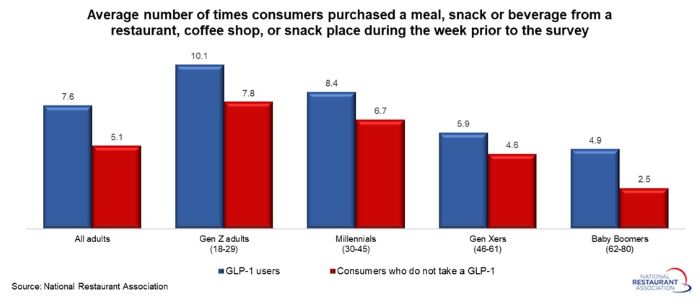
However, the survey results point to a more nuanced reality. Consumers taking GLP-1 medications are more engaged with restaurants than those who are not. On average, GLP-1 users reported purchasing a meal, snack, or beverage from a restaurant 7.6 times in the week prior to the survey, compared with 5.1 times for non-users. In other words, despite smaller appetites, GLP-1 users remain highly active restaurant customers, suggesting that while how they order may be evolving, their reliance on and interest in restaurants is not diminishing.
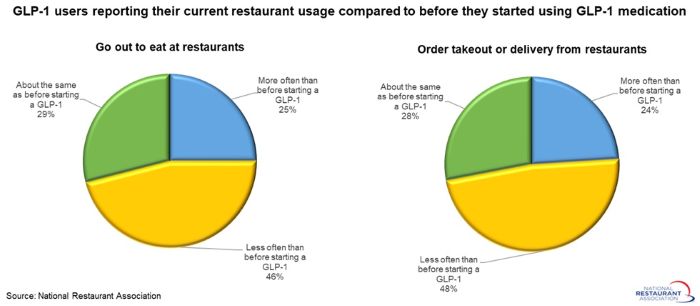
This above-average level of restaurant usage persists even as many GLP-1 users report adjusting their behavior. Nearly half say they have cut back on how often they dine out since starting the medication. At the same time, one in four say they are visiting restaurants more frequently than before, while roughly three in ten report no meaningful change. Together, these findings highlight that although GLP-1 use may shift habits, it does not diminish the importance of restaurants in users’ routines.
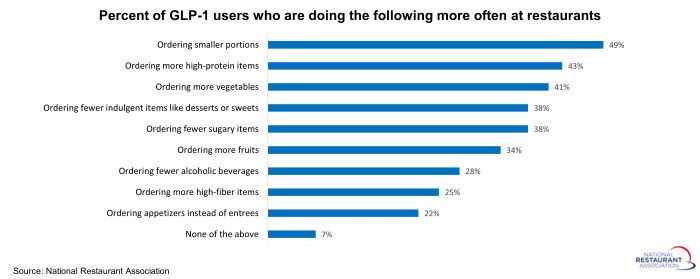
What has changed more noticeably is how GLP-1 users order when they do visit restaurants. A large majority report modifying their ordering habits, with the most common adjustments including choosing smaller portion sizes, prioritizing high-protein items, and incorporating more vegetables into their meals. These shifts reflect a broader alignment with dietary preferences often associated with GLP-1 usage, rather than a withdrawal from restaurant dining altogether.
Indeed, restaurants remain deeply embedded in the lifestyles of GLP-1 users. A striking 87% say they enjoy going to restaurants, and 71% consider restaurants an essential part of their lifestyle—10 percentage points higher than the 61% of all adults who say the same. This underscores that, even amid behavioral and dietary changes, the social, experiential, and convenience aspects of restaurants continue to resonate strongly with this group.
For restaurant operators, these patterns present a meaningful opportunity. More than nine in ten GLP-1 users indicate they would order menu items that align with their specific food and beverage preferences, and 76% say they would be willing to pay a premium for such options. This demonstrates both strong demand and pricing flexibility for offerings that cater to portion control, nutritional balance, and health-conscious eating.
Opportunities extend beyond on-premises dining as well. A significant 86% of GLP-1 users say they would be interested in purchasing take-home meal kits from restaurants that provide ingredients for complete meals tailored to their preferences. This highlights the potential for restaurants to expand into hybrid dining solutions that combine convenience with dietary customization.
At the same time, communication remains an area for improvement. While nine in ten GLP-1 users say restaurants typically offer healthy menu options, 89% believe operators could do a better job highlighting and communicating those choices. Clearer labeling, targeted messaging, and more visible positioning of wellness-oriented items could help bridge this gap.
Finally, GLP-1 users emphasize the importance of flexibility and personalization. They express strong interest in having more portion-size options, as well as the ability to order snack-sized items throughout the day. These preferences point to a broader shift toward adaptable dining formats that allow consumers to eat in ways that better match their evolving habits and nutritional goals.
At first glance, this trend may raise concerns for restaurant operators. Given that GLP-1 medications often suppress appetite, there is understandable anxiety that widespread use could dampen demand and reduce overall sales.
However, the survey results point to a more nuanced reality. Consumers taking GLP-1 medications are more engaged with restaurants than those who are not. On average, GLP-1 users reported purchasing a meal, snack, or beverage from a restaurant 7.6 times in the week prior to the survey, compared with 5.1 times for non-users. In other words, despite smaller appetites, GLP-1 users remain highly active restaurant customers, suggesting that while how they order may be evolving, their reliance on and interest in restaurants is not diminishing.
This above-average level of restaurant usage persists even as many GLP-1 users report adjusting their behavior. Nearly half say they have cut back on how often they dine out since starting the medication. At the same time, one in four say they are visiting restaurants more frequently than before, while roughly three in ten report no meaningful change. Together, these findings highlight that although GLP-1 use may shift habits, it does not diminish the importance of restaurants in users’ routines.
What has changed more noticeably is how GLP-1 users order when they do visit restaurants. A large majority report modifying their ordering habits, with the most common adjustments including choosing smaller portion sizes, prioritizing high-protein items, and incorporating more vegetables into their meals. These shifts reflect a broader alignment with dietary preferences often associated with GLP-1 usage, rather than a withdrawal from restaurant dining altogether.
Indeed, restaurants remain deeply embedded in the lifestyles of GLP-1 users. A striking 87% say they enjoy going to restaurants, and 71% consider restaurants an essential part of their lifestyle—10 percentage points higher than the 61% of all adults who say the same. This underscores that, even amid behavioral and dietary changes, the social, experiential, and convenience aspects of restaurants continue to resonate strongly with this group.
For restaurant operators, these patterns present a meaningful opportunity. More than nine in ten GLP-1 users indicate they would order menu items that align with their specific food and beverage preferences, and 76% say they would be willing to pay a premium for such options. This demonstrates both strong demand and pricing flexibility for offerings that cater to portion control, nutritional balance, and health-conscious eating.
Opportunities extend beyond on-premises dining as well. A significant 86% of GLP-1 users say they would be interested in purchasing take-home meal kits from restaurants that provide ingredients for complete meals tailored to their preferences. This highlights the potential for restaurants to expand into hybrid dining solutions that combine convenience with dietary customization.
At the same time, communication remains an area for improvement. While nine in ten GLP-1 users say restaurants typically offer healthy menu options, 89% believe operators could do a better job highlighting and communicating those choices. Clearer labeling, targeted messaging, and more visible positioning of wellness-oriented items could help bridge this gap.
Finally, GLP-1 users emphasize the importance of flexibility and personalization. They express strong interest in having more portion-size options, as well as the ability to order snack-sized items throughout the day. These preferences point to a broader shift toward adaptable dining formats that allow consumers to eat in ways that better match their evolving habits and nutritional goals.