Research
September 30, 2026
GDP
U.S. economy grew 2.2% in Q2 as consumer and business spending rebounded
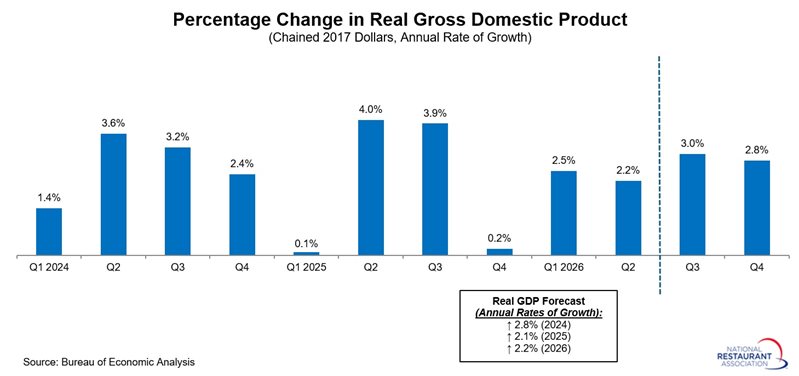
The U.S. economy expanded at a 2.2% annualized rate in the second quarter of 2026, down from 2.5% growth in the first quarter. The latest release incorporates annual revisions to GDP data dating back to 2021.
Although this was the second revision to second quarter GDP, the underlying story remains unchanged: economic momentum was stronger than headline growth suggests. Consumer spending and fixed investment, key measures of domestic demand, rose at a robust 4.6% annualized rate in the second quarter, more than double the 1.8% pace in the first quarter. The acceleration reflected renewed strength in both household and business spending following two quarters of comparatively modest growth.
Several temporary factors continued to weigh on overall GDP growth, including a wider trade deficit, slower inventory accumulation, and a decline in federal government spending.
Looking ahead, the National Restaurant Association expects the economy to remain resilient. Real GDP is forecast to grow 2.4% in 2026 and 2.5% in 2027. Even so, uncertainty and affordability pressures are likely to persist. Geopolitical risks, including the ongoing conflict involving Iran, along with weaker consumer confidence, could pose headwinds to the outlook.
Digging into the data, consumer spending strengthened considerably in the second quarter, rising at a 3.8% annual rate after softer gains in the prior two quarters. Goods spending increased by 4.5%, the strongest pace since Q4 2024. Spending on services improved in this revision to 3.4%. Overall, personal consumption expenditures contributed 2.51 percentage points to real GDP growth in Q2, a sharp improvement from just 0.49 percentage points in the first quarter and a clear sign that consumers became more willing to spend.
Business investment also remained a bright spot, although overall investment activity was mixed. Fixed investment increased at a healthy 7.7% annual rate in Q2, building on a 6.1% gain in the first quarter. As in the previous quarter, growth was driven by strong increases in equipment investment (+13.4%) and intellectual property products investment (+9.2%), reflecting continued spending on artificial intelligence and other productivity-enhancing technologies.
By contrast, investment in structures inched up just 0.1%, but that marked the first positive reading in five quarters. Meanwhile, businesses have scaled back inventory accumulation in four of the past five quarters. As a result, gross private domestic investment contributed 0.82 percentage points to GDP growth in Q2, down from 1.25 percentage points in Q1.
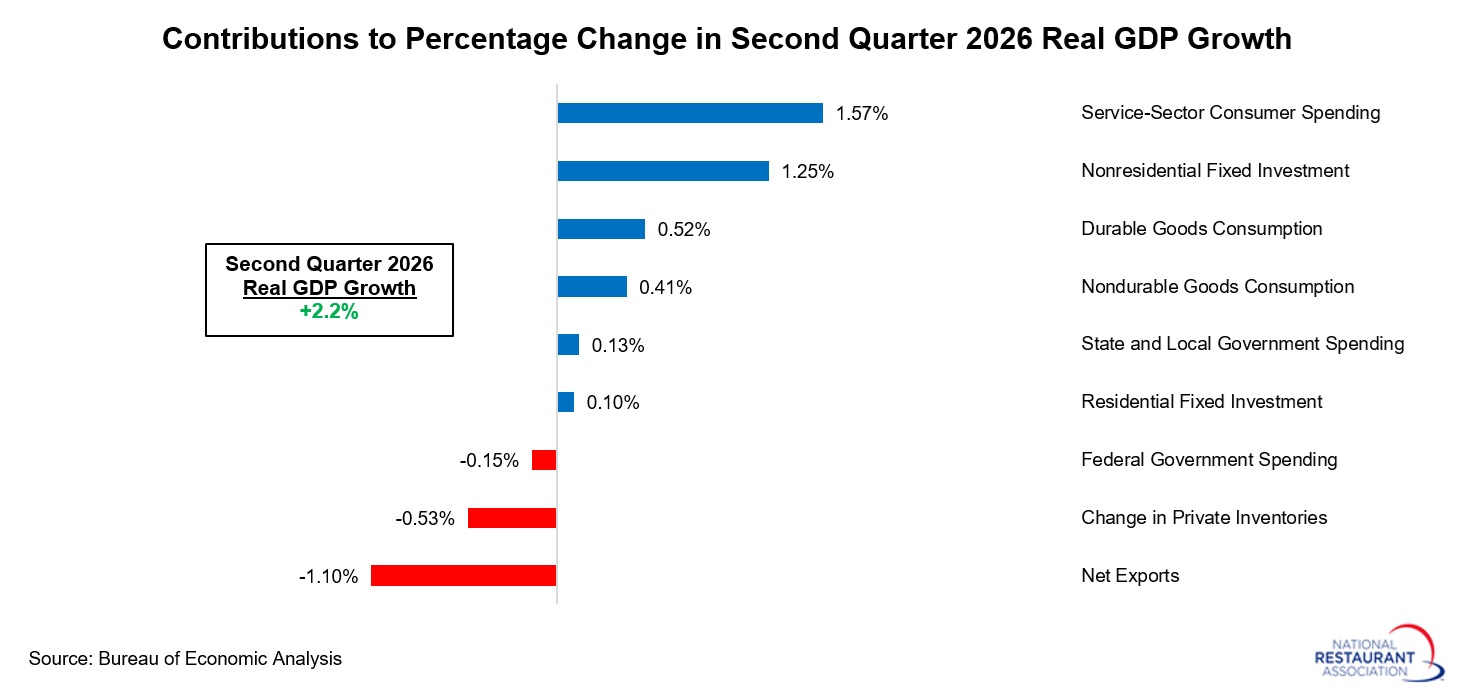
Trade remained a headwind for economic growth. Net exports reduced real GDP growth by 1.10 percentage points in the second quarter, marking the third consecutive quarter in which trade weighed on the economy. Imports increased 12.6% at an annual rate, outpacing the 5.0% gain in exports and widening the trade drag on growth.
Government spending also exerted modest downward pressure on GDP. Federal government expenditures declined for the second time in the past three quarters, subtracting 0.15 percentage points from growth, with spending down 2.1% over the past year. In contrast, state and local government spending rose 1.2% at an annual rate, adding 0.13 percentage points to overall GDP growth, although that represented a slower pace than the 1.4% increase recorded in the first quarter.
Although this was the second revision to second quarter GDP, the underlying story remains unchanged: economic momentum was stronger than headline growth suggests. Consumer spending and fixed investment, key measures of domestic demand, rose at a robust 4.6% annualized rate in the second quarter, more than double the 1.8% pace in the first quarter. The acceleration reflected renewed strength in both household and business spending following two quarters of comparatively modest growth.
Several temporary factors continued to weigh on overall GDP growth, including a wider trade deficit, slower inventory accumulation, and a decline in federal government spending.
Looking ahead, the National Restaurant Association expects the economy to remain resilient. Real GDP is forecast to grow 2.4% in 2026 and 2.5% in 2027. Even so, uncertainty and affordability pressures are likely to persist. Geopolitical risks, including the ongoing conflict involving Iran, along with weaker consumer confidence, could pose headwinds to the outlook.
Digging into the data, consumer spending strengthened considerably in the second quarter, rising at a 3.8% annual rate after softer gains in the prior two quarters. Goods spending increased by 4.5%, the strongest pace since Q4 2024. Spending on services improved in this revision to 3.4%. Overall, personal consumption expenditures contributed 2.51 percentage points to real GDP growth in Q2, a sharp improvement from just 0.49 percentage points in the first quarter and a clear sign that consumers became more willing to spend.
Business investment also remained a bright spot, although overall investment activity was mixed. Fixed investment increased at a healthy 7.7% annual rate in Q2, building on a 6.1% gain in the first quarter. As in the previous quarter, growth was driven by strong increases in equipment investment (+13.4%) and intellectual property products investment (+9.2%), reflecting continued spending on artificial intelligence and other productivity-enhancing technologies.
By contrast, investment in structures inched up just 0.1%, but that marked the first positive reading in five quarters. Meanwhile, businesses have scaled back inventory accumulation in four of the past five quarters. As a result, gross private domestic investment contributed 0.82 percentage points to GDP growth in Q2, down from 1.25 percentage points in Q1.
Trade remained a headwind for economic growth. Net exports reduced real GDP growth by 1.10 percentage points in the second quarter, marking the third consecutive quarter in which trade weighed on the economy. Imports increased 12.6% at an annual rate, outpacing the 5.0% gain in exports and widening the trade drag on growth.
Government spending also exerted modest downward pressure on GDP. Federal government expenditures declined for the second time in the past three quarters, subtracting 0.15 percentage points from growth, with spending down 2.1% over the past year. In contrast, state and local government spending rose 1.2% at an annual rate, adding 0.13 percentage points to overall GDP growth, although that represented a slower pace than the 1.4% increase recorded in the first quarter.
.jpg?lang=en-US "contributions-to-real-GDP-growth-(1).jpg")