Research
September 30, 2026
PCE Deflator
Personal spending rose solidly in August despite stubborn inflation and consumer angst
The Personal Consumption Expenditures (PCE) deflator, the Federal Reserve's preferred measure of inflation, rose 0.3% in August after increasing just 0.1% in July. The acceleration was driven largely by energy prices, with gasoline and other energy costs jumping 4.4% during the month following declines in both June and July. On a year-over-year basis, energy prices were up 27.9%.
In contrast, prices for food and beverages purchased for off-premises consumption were unchanged in August after slipping 0.1% in July. Compared with a year ago, grocery prices were 1.9% higher.
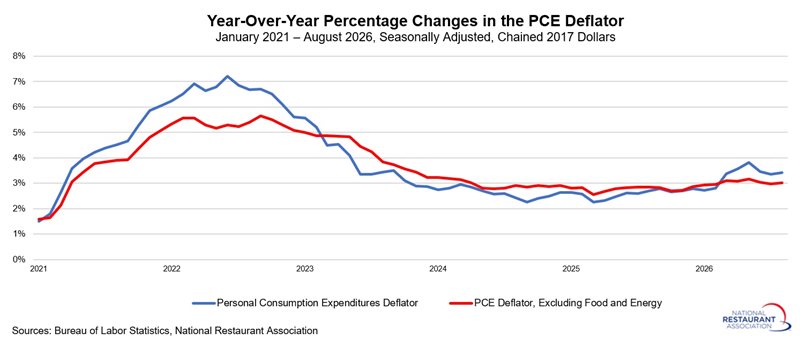
Overall consumer inflation remained elevated. The headline PCE deflator increased 3.4% over the past 12 months in August, matching July's pace. Core PCE inflation, which excludes food and energy, rose 0.2% in August following 0.1% gains in both June and July. On a year-over-year basis, core inflation held steady at 3.0% for the third consecutive month and has averaged that rate so far in 2026. Recent data revisions, however, indicate that underlying inflation pressures were somewhat less pronounced than previously reported.
Even so, inflation remains stubbornly above the Federal Reserve's 2% target, with higher energy costs adding uncertainty to the outlook. These ongoing price pressures contributed to the Federal Open Market Committee's decision to raise short-term interest rates in September, and additional rate hikes remain likely before year-end as policymakers work to restore price stability.
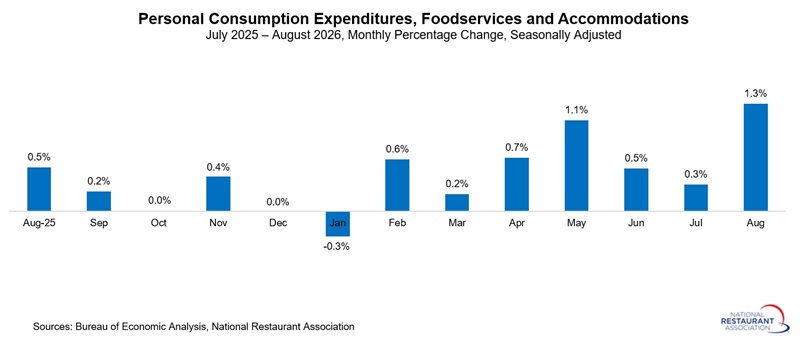
Consumer spending continued to grow solidly in August, with personal consumption expenditures rising 0.9%, the strongest monthly gain since March. Household demand has remained remarkably resilient despite elevated gasoline prices, weaker consumer confidence, and broader economic uncertainty, with higher tax refunds likely providing some support earlier in the year. Spending on foodservices and accommodations outpaced overall consumption, increasing 1.3% in August.
Over the past 12 months, total personal consumption expenditures rose 6.1%, highlighting the continued strength of consumer demand. Spending on foodservices and accommodations increased 5.2% over that period, suggesting consumers have largely maintained their willingness to dine out and travel despite ongoing affordability pressures.
Even so, a sizable portion of spending growth continues to reflect higher prices rather than increased purchasing activity. After adjusting for inflation, real personal consumption was up 2.6% from a year earlier but was unchanged in August. Real spending on foodservices and accommodations rose 1.9% over the past year, indicating continued, albeit more moderate, growth in discretionary spending.
Personal income rose 0.2% in August, edging down from 0.3% growth in July. Overall, personal income grew by 4.3% over the past 12 months. Wages, which have been a large contributor to the economy’s resilience, increased 0.3% in August, with 4.2% growth year-over-year.
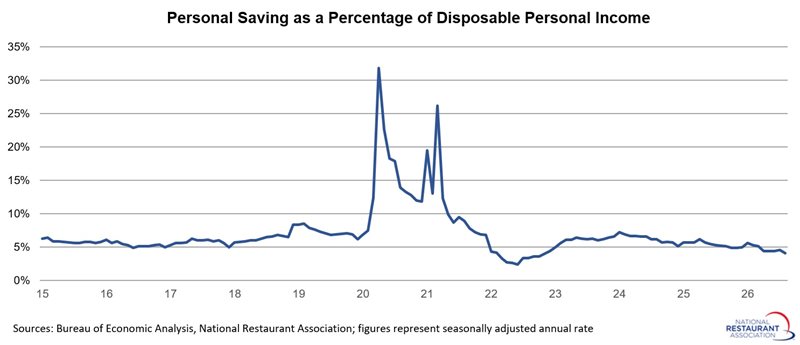
With spending well outpacing income growth, the personal savings rate decreased from 4.6% in July to 4.1% in August, the lowest since November 2022. Overall, the savings rates in the post‑pandemic period remain well below historical norms. Prior to the pandemic, the savings rate averaged 6.5% from 2017 to 2019, compared with an average of just 4.7% year to date. This suggests that consumers are dipping into their savings to finance their spending.
In contrast, prices for food and beverages purchased for off-premises consumption were unchanged in August after slipping 0.1% in July. Compared with a year ago, grocery prices were 1.9% higher.
Overall consumer inflation remained elevated. The headline PCE deflator increased 3.4% over the past 12 months in August, matching July's pace. Core PCE inflation, which excludes food and energy, rose 0.2% in August following 0.1% gains in both June and July. On a year-over-year basis, core inflation held steady at 3.0% for the third consecutive month and has averaged that rate so far in 2026. Recent data revisions, however, indicate that underlying inflation pressures were somewhat less pronounced than previously reported.
Even so, inflation remains stubbornly above the Federal Reserve's 2% target, with higher energy costs adding uncertainty to the outlook. These ongoing price pressures contributed to the Federal Open Market Committee's decision to raise short-term interest rates in September, and additional rate hikes remain likely before year-end as policymakers work to restore price stability.
Consumer spending continued to grow solidly in August, with personal consumption expenditures rising 0.9%, the strongest monthly gain since March. Household demand has remained remarkably resilient despite elevated gasoline prices, weaker consumer confidence, and broader economic uncertainty, with higher tax refunds likely providing some support earlier in the year. Spending on foodservices and accommodations outpaced overall consumption, increasing 1.3% in August.
Over the past 12 months, total personal consumption expenditures rose 6.1%, highlighting the continued strength of consumer demand. Spending on foodservices and accommodations increased 5.2% over that period, suggesting consumers have largely maintained their willingness to dine out and travel despite ongoing affordability pressures.
Even so, a sizable portion of spending growth continues to reflect higher prices rather than increased purchasing activity. After adjusting for inflation, real personal consumption was up 2.6% from a year earlier but was unchanged in August. Real spending on foodservices and accommodations rose 1.9% over the past year, indicating continued, albeit more moderate, growth in discretionary spending.
With spending well outpacing income growth, the personal savings rate decreased from 4.6% in July to 4.1% in August, the lowest since November 2022. Overall, the savings rates in the post‑pandemic period remain well below historical norms. Prior to the pandemic, the savings rate averaged 6.5% from 2017 to 2019, compared with an average of just 4.7% year to date. This suggests that consumers are dipping into their savings to finance their spending.